
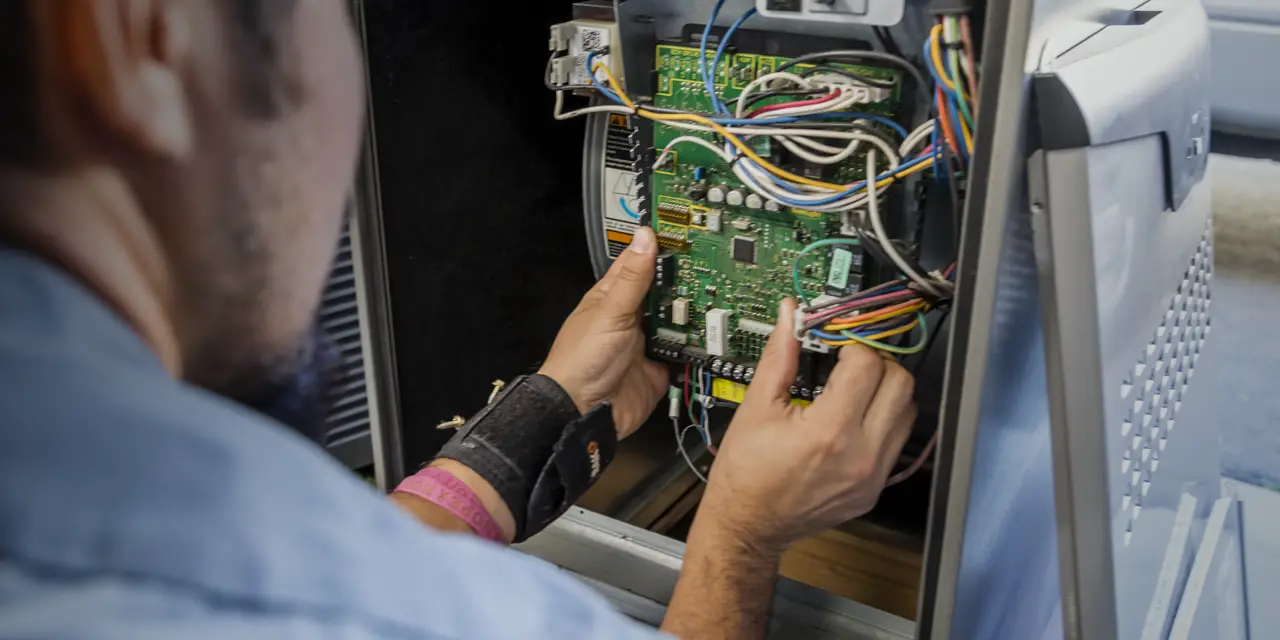
Heating and cooling account for nearly half of the energy used in a typical American home, and most of that waste is preventable. A properly maintained HVAC system runs at designed efficiency, which means shorter cycles, lower monthly bills, and fewer emergency repairs. In Corona’s climate, where cooling season runs long and hard, consistent professional maintenance is one of the most cost-effective things a homeowner can do.
At Lucky Air and Plumbing, we have spent years helping Corona homeowners get more from their equipment. This guide explains how a neglected system quietly wastes energy, what a professional tune-up involves, and what realistic results you can expect from staying on a maintenance schedule.
How a Neglected HVAC System Wastes Energy
An HVAC system is a collection of components that must work together. When one part falls out of tune, the rest of the system compensates by running longer and drawing more power. The thermostat measures temperature, not effort, so the equipment keeps cycling until it hits the setpoint, regardless of how hard it has to work to get there.
The air filter is the most overlooked example of this. As it collects dust and debris, it restricts airflow and forces the blower to work harder to move the same volume of air. The U.S. Department of Energy states that replacing a dirty, clogged filter with a clean one can lower an HVAC system’s energy consumption by 5 to 15 percent. That is a meaningful number for a task that takes minutes.
The same principle applies throughout the system. A condenser coil is the outdoor component that releases heat from your home into the surrounding air; when it is coated in grime, it cannot shed heat efficiently and the system runs longer to compensate. An evaporator coil is the indoor component that absorbs heat from your home’s air; when it is dirty, the same problem occurs in reverse. Low refrigerant, usually the result of a slow leak, forces the compressor to work harder while delivering less cooling. A capacitor is the electrical component that starts and runs the motors in your system; a weak one causes motors to draw excess current and is one of the leading causes of summer breakdowns.
Individually, these problems seem minor. Together, they turn an efficient system into an expensive one and dramatically raise the odds of a failure on the hottest afternoon of the year.
What a Professional HVAC Tune-Up Actually Covers in Corona
A genuine tune-up is more than a quick visual check. When our technicians perform a seasonal tune-up in Corona, they follow a comprehensive checklist designed to restore efficiency and catch small problems before they become failures.
What Lucky Air and Plumbing Checks on Every Maintenance Visit
| Maintenance Task | What It Addresses |
|---|---|
| Clean condenser and evaporator coils | Restores proper heat exchange; dirty coils are one of the most direct causes of lost efficiency |
| Inspect and replace air filter | Removes airflow restriction that strains the blower and raises energy use |
| Check refrigerant charge against manufacturer specifications | Confirms the system is neither low nor overcharged; low refrigerant means harder compressor work and less cooling |
| Test and tighten electrical components (capacitors, contactors, connections) | Prevents motors from drawing excess current and catches components at risk of mid-season failure |
| Calibrate thermostat | Ensures the system cycles correctly and holds the setpoint without overshooting |
| Lubricate moving parts and clear condensate drain | Reduces wear on motors and bearings; prevents water damage and humidity issues |
| Verify safe combustion on gas furnaces | Confirms the furnace is burning cleanly for both safety and efficiency |
The timing of these checks matters as much as the checks themselves. Catching a failing capacitor in spring is a routine, low-cost fix. Discovering it has damaged your compressor in July is a very different conversation.
Twenty Years of Use, Still Running: A Maintenance Story From Corona
For many homeowners, the hardest part of system upkeep is not the mechanical work but finding a company that will tell them the truth about what their equipment actually needs. Bianca O’Brien was in exactly that position. With a system over 20 years old, every service visit carried the risk of an upsell she did not need.
What she found instead was a pattern of consistency over three separate maintenance visits. Our technicians communicated clearly about arrival windows, showed up on schedule, and gave honest assessments of the system’s condition without steering her toward a replacement she was not ready for. In her words: “What stands out most is that they give honest, fair assessments without trying to pressure us into unnecessary repairs or upgrades… During this latest visit, I decided to sign up for their yearly service plan because I value having a trustworthy company regularly checking on our system and helping us think proactively about keeping it running efficiently for as long as possible.” Read Bianca’s full Google review.
The result of that trust was a two-decade-old system still running through Corona’s demanding climate, maintained rather than replaced prematurely, with a homeowner who now thinks about her equipment year-round instead of only when something breaks.
The Real Payoff of Staying on a Maintenance Schedule
Homeowners who commit to an HVAC maintenance plan consistently see the same outcomes, all from a system that stays tuned instead of drifting out of adjustment between crises.
Lower, more stable energy bills. A properly tuned system stops working harder than needed. Monthly costs stabilize or drop instead of creeping upward season after season.
Longer equipment life. Components on a maintenance plan avoid years of accumulated strain. That delays the large expense of a full system replacement and gives you more time to plan for it on your terms.
Fewer emergency breakdowns. Regular visits catch weak capacitors, low refrigerant, and dirty coils before they cascade into a failure on the hottest day of summer. If AC repair or a heating system inspection does become necessary, a company already familiar with your system can diagnose faster and more accurately.
Better indoor air quality. Clean filters and coils reduce airborne dust and allergens throughout the home. The EPA links proper filtration and ventilation directly to improved outcomes for residents managing allergies or asthma. If indoor air quality is a concern in your household, a maintained system is the foundation.
Maintenance will not turn a 15-year-old system into a brand-new high-efficiency unit. What it does is ensure your equipment operates at the highest efficiency it is capable of, for as long as it is capable of doing so.
For over 25 years, Lucky Air and Plumbing has kept homes across Corona and the greater Riverside area comfortable through every season. As a licensed, bonded, and fully insured contractor and a Premier Lennox Dealer, our factory-trained technicians service all makes and models. Whether you need a seasonal tune-up or a full system evaluation, schedule your service online and we will take it from there.
Frequently Asked Questions About HVAC Maintenance in Corona
How often should I schedule HVAC maintenance in Corona?
Most systems benefit from professional service once a year, but homes with both heating and cooling equipment typically do best with two visits, one before summer and one before winter. In Corona’s climate, where cooling season is long and demanding, the pre-summer visit is especially important because it catches problems before the system is running at full capacity every day. A technician will confirm refrigerant levels, test electrical components, and clean coils when it is still easy to fix anything they find. Skipping a year means the system goes into its hardest season with whatever issues developed over the past twelve months.
How much can regular HVAC maintenance actually save on my energy bills?
The savings depend on the current condition of the system, but the numbers are well documented. The U.S. Department of Energy reports that a clean filter alone can reduce HVAC energy consumption by 5 to 15 percent. When you add clean coils, correct refrigerant charge, and properly functioning electrical components, a system that was running inefficiently can see a measurable drop in monthly costs. For a home in Corona running central air through a long summer, that adds up across several billing cycles.
Can I just change the air filter myself and skip the professional tune-up?
Changing your filter regularly is one of the best habits a homeowner can develop, and we strongly encourage it. But a filter change only addresses one component in a system with many interacting parts. A professional tune-up also cleans the condenser and evaporator coils, verifies the refrigerant charge, tests capacitors and contactors, checks motor amp draw, and calibrates the thermostat. None of those tasks can be done with a new filter. The filter keeps the system breathing; the tune-up keeps everything else working the way it should.
Is a maintenance plan worth it for an older HVAC system?
Older systems actually benefit most from consistent monitoring, because aging components are more likely to develop problems and more likely to cascade when one issue goes uncaught. A maintenance plan for an older system is not about extending its life indefinitely but about getting the most efficient use from it in the time it has left, and knowing early when replacement is becoming the more practical financial choice. Bianca O’Brien’s experience with her 20-year-old system is a good example: consistent, honest maintenance visits kept the system running and gave her the information she needed to plan ahead.
What warning signs mean my HVAC system needs attention now?
The most common signals are rising energy bills without any change in usage, uneven temperatures between rooms, longer running cycles than usual, unusual sounds like banging on startup or squealing during operation, and increased dust or reduced air quality throughout the home. Any one of these is worth a professional inspection. In Corona’s heat, a system showing warning signs in spring should be addressed before summer arrives, because a struggling system under peak load is far more likely to fail than one that gets serviced while the weather is still manageable.
Key Takeaways
- Heating and cooling account for nearly half of the energy used in a typical American home, and most inefficiency is preventable with regular maintenance.
- The U.S. Department of Energy estimates that replacing a dirty filter with a clean one can lower HVAC energy consumption by 5 to 15 percent.
- Dirty condenser and evaporator coils, low refrigerant, weak capacitors, and a miscalibrated thermostat each force the system to run longer and draw more power than necessary.
- A cracked or failing capacitor is one of the leading causes of mid-summer HVAC breakdowns; catching it during a spring tune-up is a low-cost fix, while a compressor damaged by a failed capacitor is not.
- The EPA links proper filtration and ventilation directly to improved indoor air quality outcomes for residents managing allergies or asthma.
- Homes with both heating and cooling benefit from two professional service visits per year, one before summer and one before winter.
- Lucky Air and Plumbing is a licensed, bonded, and insured Premier Lennox Dealer with over 25 years serving Corona and the greater Riverside area.
- Enrolling in a maintenance plan converts reactive emergency service into proactive care with predictable costs and priority scheduling.
Citations and References
- U.S. Department of Energy. Home Cooling 101. https://www.energy.gov/sites/prod/files/2014/06/f16/HomeCooling101.pdf
- U.S. Environmental Protection Agency. Indoor Air Plus and Asthma. https://www.epa.gov/indoorairplus/indoor-airplus-and-asthma