The most common plumbing problems Corona homeowners face are pipe leaks accelerated by hard water mineral scale, recurring drain clogs, running toilets, sewer line damage from tree roots and ground movement, and water heaters that wear out faster than manufacturers rate them. Hard water is water with elevated levels of dissolved calcium and magnesium; at approximately 15.8 grains per gallon, Corona’s water supply is among the hardest in Southern California, and that single factor speeds wear on every fitting, fixture, and appliance in your home. Most of these problems cost little to fix when caught early and significantly more when they develop into water damage, mold, or emergency failures. Two of them, gas leaks and active sewer line breaks, are urgent regardless of timing.
Here is what each problem looks like, why it develops faster in Corona than in softer-water markets, and what the right fix actually involves.
Why Corona’s Plumbing Faces Extra Pressure
Two local factors make ordinary plumbing problems worse here than they would be almost anywhere else in Southern California.
The first is water hardness. Corona’s supply tests at approximately 15.8 grains per gallon, placing it in the very hard category by any standard scale. Mineral scale is the chalky calcium and magnesium deposit that accumulates on the interior walls of pipes, the heating elements of water heaters, and the aerators of faucets over time; it narrows flow paths, stresses fittings, and forces appliances to work harder than they were designed to.
The second is geology. Southern California seismic activity shifts underground pipe joints over time, and the long dry seasons that characterize the Inland Empire drive tree roots deep in search of moisture, often directly into sewer lines. Combine these two forces, and you have the exact conditions that produce most of the emergency calls we respond to in Corona.
The Most Common Plumbing Problems in Corona
Leaking Pipes
A visible drip is an annoyance. A hidden leak inside a wall or under a slab is a structural and mold risk. Pipes fail at joints, fittings, and sections weakened by corrosion, and Corona’s hard water speeds that process by depositing scale that stresses connections from the inside out.
According to the U.S. EPA’s WaterSense program, household leaks waste nearly a trillion gallons of water nationwide each year, and the majority come from small, fixable failures that homeowners do not catch until the damage is already visible.
Leaks are traced using pressure testing and electronic detection, then fixed at the actual point of failure, whether a fitting, a joint, or a section that requires full repiping. Homes with original galvanized or older copper lines and recurring leaks are telling you the same thing: the pipes are nearing the end of their service life.
Clogged Drains
Recurring clogs point to something deeper than a surface blockage. In Corona kitchens, grease combines with mineral scale to create buildups that form faster than they do in soft-water areas. Bathroom drains add hair and soap residue to the same mix.
Hydro-jetting is a drain-clearing method that uses high-pressure water, typically between 3,000 and 4,000 psi, to scour pipe walls clean rather than simply punching a hole through a blockage; it removes grease, scale, and debris more thoroughly than a mechanical snake and leaves the pipe interior actually clean. Over-the-counter chemical drain cleaners offer short-term results while corroding the pipes themselves, making the underlying problem worse over time.
For drains that keep backing up, a professional drain cleaning with camera inspection is the only reliable way to find the actual cause. High-pressure hydro-jetting clears built-up scale and grease that mechanical snaking leaves behind.
Low Water Pressure
Weak pressure throughout the house is a symptom, not a cause. Common sources include mineral buildup inside aerators and fixture inlets, a failing pressure-reducing valve, partially closed shutoff valves left that way after prior repairs, or a hidden supply-side leak reducing flow before it reaches fixtures.
A pressure-reducing valve, sometimes called a PRV, is a device on the main water supply line that controls how much pressure enters the home’s plumbing system; a failing PRV can cause pressure either too high, which stresses pipes and fittings, or too low, which makes every appliance and fixture sluggish. A pressure test at the meter combined with section-by-section isolation identifies where the loss is occurring. A sudden whole-house pressure drop is a different situation and can indicate a supply-line break that needs immediate attention.
Running Toilets
A continuously running toilet is one of the most common sources of water waste in a home and one of the easiest to overlook because the sound becomes background noise. The EPA estimates a single running toilet can waste hundreds of gallons per day.
The usual causes are a worn flapper, a faulty fill valve, or a float set too high. A flapper is the rubber seal at the bottom of the toilet tank that opens to let water into the bowl on each flush and closes to hold water for the next cycle; when it warps or wears, water trickles continuously from the tank into the bowl without the toilet running visibly. These are quick repairs once properly diagnosed: a new flapper, a fill valve rebuild, or a float adjustment.
Gas Line Issues
Gas problems are where all DIY approaches end. A rotten-egg odor, a hissing sound near an appliance, or a pilot that will not stay lit are serious warning signs. If a gas leak is suspected, leave the home immediately, avoid switching anything electrical on or off, and call your gas utility and emergency services before contacting any plumber.
The California Plumbing Code sets strict standards for natural gas line work, requiring licensed contractors, permits, and inspections for all repairs and modifications. Our licensed technicians handle gas line repair to full code compliance, including the pressure testing that this category of work demands before any appliances return to service.
Water Heater Problems
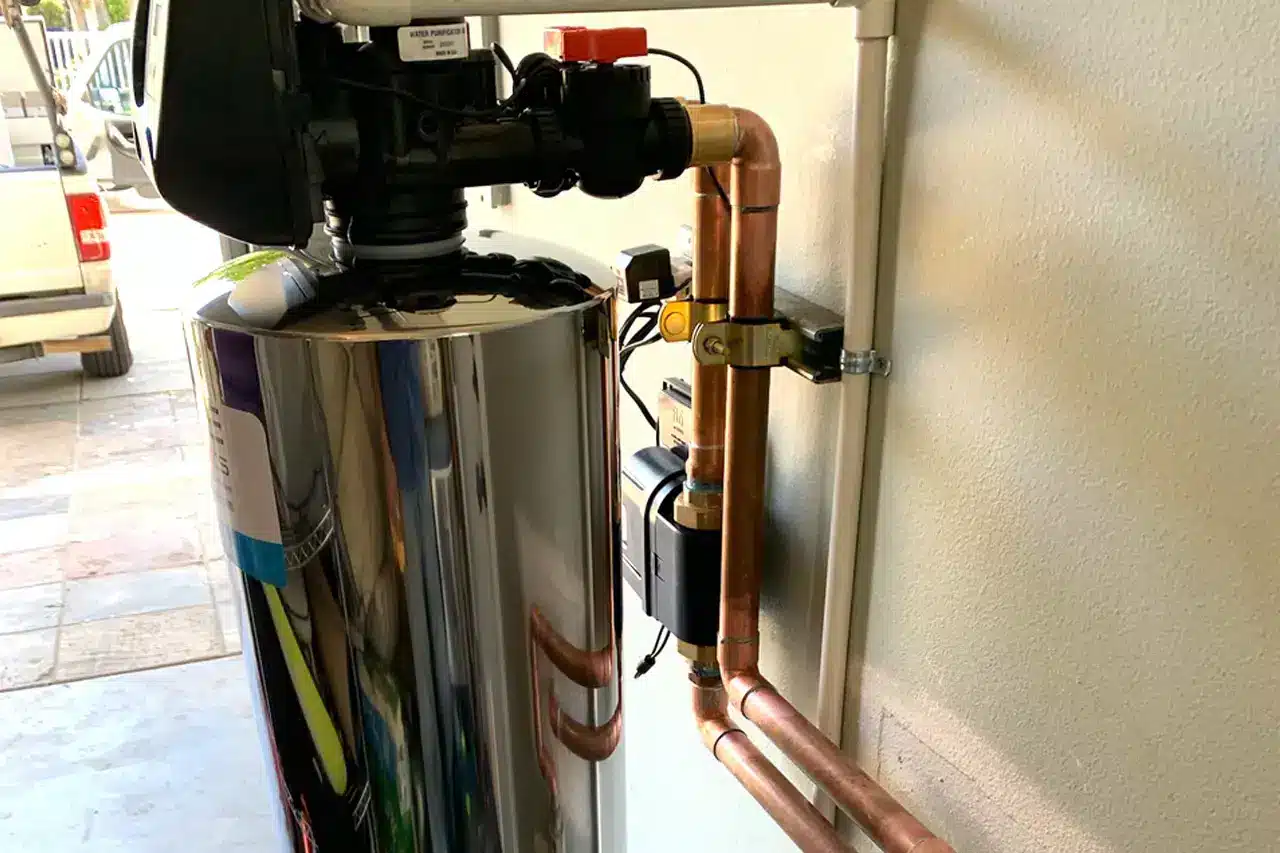
Corona’s hard water is particularly hard on water heaters. Sediment is the layer of calcium and magnesium that settles out of heated water and accumulates at the bottom of a storage tank over time; it reduces heating efficiency, causes popping and rumbling sounds during heating cycles, and shortens tank lifespan by causing the tank bottom to overheat.
An anode rod is a sacrificial metal rod inside the tank that corrodes preferentially to protect the steel tank walls from rust; in Corona’s hard water, anode rods deplete faster than manufacturer replacement schedules assume, making annual inspection worthwhile. Signs of trouble include rusty water, inconsistent hot water temperatures, moisture around the unit’s base, or a sustained rise in energy bills. The U.S. Department of Energy notes that water heating is typically the second-largest energy expense in most homes, making timely water heater repair and regular sediment flushing worth the investment.
Sewer Line Damage and Hidden Leaks
The most expensive problems are the ones happening underground. Corona sewer lines face two specific local threats: tree roots seeking moisture during dry seasons by growing into pipe joints and cracks, and seismic ground movement that shifts pipe sections out of alignment over time.
Warning signs include slow drains throughout the house, gurgling from multiple fixtures at once, recurring sewage odors indoors or outside, and unexplained wet patches in the yard. Drain and sewer camera inspections locate the exact point of failure, whether root intrusion, a shifted joint, or a cracked section, and guide targeted repairs rather than guesswork. Trenchless replacement is a repair method that installs a new pipe liner or pulls a new pipe through the existing path without requiring excavation; it is significantly less disruptive than traditional open-trench repair and often less expensive when the pipe run is long.
Caught early, sewer problems are targeted repairs. Caught late, they are full yard excavations.
Common Plumbing Warning Signs and What They Mean
The table below maps the most common symptoms to their likely cause so you know which issues to monitor and which to treat as urgent.
Plumbing Warning Signs for Corona Homeowners
| What You Notice | Likely Problem | What to Do |
|---|---|---|
| Dripping faucet or moisture at a pipe joint | Pipe leak at fitting, corrosion, or failing connection | Schedule repair; hard water accelerates joint wear |
| Recurring slow drains throughout the house | Sewer line buildup, root intrusion, or venting issue | Camera inspection to identify the cause |
| Sudden pressure drop across all fixtures | Supply line break or PRV failure | Urgent; check for active leak immediately |
| Toilet running continuously | Worn flapper, faulty fill valve, or float set too high | Repair soon; can waste hundreds of gallons per day |
| Rotten-egg smell or hissing near appliances | Gas leak | Leave home immediately; call utility and emergency services |
| Popping or rumbling from water heater | Hard-water sediment buildup | Flush sediment; inspect anode rod |
| Gurgling from multiple fixtures, sewage odor, wet yard | Sewer line damage or root intrusion | Camera inspection; do not wait |
| Unexplained spike in water bill | Hidden leak | Professional leak detection |
A Main Line Break in Corona Over New Year’s, Restored While Others Waited
Most plumbing emergencies feel like bad timing. Jason Green’s hit on New Year’s Eve, in the middle of rain and mud, took out the family’s main water line, leaving the home with no running water.
Technicians Dennis and Rick responded and worked for more than two days, through New Year’s Eve and into New Year’s Day, to restore the line. The job was complicated when the local water district misdiagnosed the problem and provided no hands-on support, forcing the team to press forward on their own diagnosis while Michael oversaw the project to confirm it was done correctly.
In Jason’s words: “They repaired a broken main water line over a two-day period in the middle of mud and rain, and did so with professionalism, determination, and incredible expertise. This is a company that truly goes above and beyond without ever needing to be asked.” Read Jason’s full Google review.
The family’s water was fully restored, the diagnosis was correct, and the job was completed through conditions that would have stopped most crews. That is what it looks like when the right team shows up.
Plumbing Maintenance Habits That Actually Prevent Problems
These habits cost little time and prevent most of the problems described above. They matter more in Corona than in soft-water markets because hard water accelerates every form of wear.
Quick-Reference Plumbing Maintenance for Corona Homeowners
- Know where your main shut-off valve is before an emergency forces you to find it.
- Watch your water bill each month. A sudden increase with no change in usage almost always signals a hidden leak.
- Skip chemical drain cleaners. They corrode pipes over time; use a drain strainer and address buildup mechanically.
- Flush your water heater once a year to clear sediment that accumulates faster in hard water.
- Never pour grease down the drain. Combined with mineral scale, it creates some of the worst kitchen clogs we clear.
- Test toilets for silent leaks by adding a few drops of food coloring to the tank; if color appears in the bowl without flushing, the flapper is not sealing.
- Fix small drips early. A single dripping faucet wastes hundreds of gallons per month and typically worsens over time.
- Schedule a professional inspection every one to two years, especially for older homes or properties near large mature trees.
Reach Out to Lucky Air and Plumbing
Every problem above is less expensive to prevent than to repair. Lucky Air and Plumbing has served Corona and surrounding Riverside County communities since 2003, with hands-on diagnostics that use real tools rather than guesswork.
We are available 24/7 for emergency plumbing services, and we back our work with current special offers, including a free second opinion. When the problem is worth getting right the first time, reach out today.
Frequently Asked Questions About Common Plumbing Problems in Corona
How do I know if I have a hidden water leak? Watch for an unexplained jump in your monthly water bill when usage habits have not changed, the sound of running water when everything in the house is off, warm spots on the floor that can indicate a slab leak beneath the concrete, and musty odors inside walls or cabinets that point to slow moisture accumulation. Any one of these warrants a professional leak check using pressure testing and electronic detection rather than a guess-and-open-the-wall approach. In Corona, where hard water accelerates pipe corrosion, hidden leaks inside walls and slabs are more common than homeowners expect, and the damage they cause when left in place is disproportionate to the cost of finding and fixing them early.
Are chemical drain cleaners safe to use? No, not as a regular fix. Chemical drain cleaners work by generating heat and caustic reactions inside the pipe, which break down organic material but also attack the pipe material itself, particularly older PVC and metal pipes, over repeated applications. They also frequently fail against deeper blockages, leaving a corrosive residue that makes the next professional cleaning more difficult. Mechanical clearing or hydro-jetting removes the actual blockage without leaving chemical residue behind and is the appropriate fix for anything beyond a surface-level hair clog.
How often should I have my plumbing professionally inspected? Every one to two years is the standard recommendation for most Corona-area homes, and more frequently for homes with older pipe materials like galvanized steel or early copper, a history of root intrusion, or a location near large mature trees. A professional inspection checks pipe condition, pressure readings, the pressure-reducing valve, the water heater’s anode rod and sediment level, and drain line health, all of which hard water and Inland Empire geology affect more aggressively than in most Southern California markets. Annual inspections are also the most cost-effective way to catch small problems before they require emergency repairs.
Why does my plumbing clog and corrode so fast in Corona? Corona’s water supply tests at approximately 15.8 grains per gallon, placing it in the very hard category and significantly above the threshold at which mineral scale accumulation becomes a practical problem for plumbing systems. That scale builds up inside pipes and appliances continuously, narrowing flow paths, stressing fittings, and reducing appliance efficiency over time. In kitchens specifically, grease and mineral scale combine to form blockages faster than they do in soft-water markets, which is why drain problems that seem like bad luck in Corona are actually a predictable product of local water chemistry.
What should I do if I smell gas in my home? Leave the home immediately. Do not flip any light switches, use your phone while still inside the building, or start appliances on the way out, because electrical arcs can ignite gas. Once outside and away from the structure, call your gas utility’s emergency line and 911 before contacting a plumber. After the utility has cleared the home and confirmed it is safe to enter, our licensed technicians handle gas line repair to California code standards, including pressure testing to confirm the repair is complete before any appliances return to service.
Key Takeaways
- Corona’s water supply tests at approximately 15.8 grains per gallon, placing it in the very hard category; mineral scale from this water accelerates wear on every pipe, fitting, fixture, and water heater in the home.
- EPA WaterSense data indicates household leaks waste nearly a trillion gallons of water nationally each year; most originate from small, fixable failures that go undetected until damage is already visible.
- A running toilet can waste hundreds of gallons per day according to the EPA; the most common cause is a worn flapper or faulty fill valve, both of which are inexpensive repairs once properly diagnosed.
- Hydro-jetting clears pipe walls at 3,000 to 4,000 psi, removing grease and scale that mechanical snaking leaves behind; it is the correct fix for drain lines that clog repeatedly in hard-water markets like Corona.
- An anode rod protects a water heater tank from rust by corroding in its place; Corona’s hard water depletes anode rods faster than manufacturer replacement schedules assume, making annual inspection worthwhile.
- Sewer line damage in Corona has two specific local causes: tree root intrusion driven by long dry seasons and seismic ground movement that shifts pipe joints; camera inspection locates the exact failure point before any excavation begins.
- Gas leak response starts with leaving the home and calling the utility’s emergency line before contacting a plumber; the California Plumbing Code requires licensed contractors, permits, and pressure testing for all gas line repairs.
- Lucky Air and Plumbing has served Corona and surrounding Riverside County communities since 2003 and is available 24/7 for emergency service. Contact us to schedule an inspection or get an honest second opinion.
Citations and References
- U.S. Environmental Protection Agency. WaterSense: Fix a Leak Week. https://www.epa.gov/watersense/fix-leak-week
- U.S. Environmental Protection Agency. WaterSense: Residential Toilets. https://www.epa.gov/watersense/residential-toilets
- California Department of Industrial Relations. California Plumbing Code, Title 24. https://www.dir.ca.gov/title8/536.html
- U.S. Department of Energy. Water Heating. https://www.energy.gov/energysaver/water-heating