
Reliable Repiping In Riverside
Repiping replaces a home’s aging or failing water supply pipes with new material sized and routed to current code, and it is the fix for a house that has moved past isolated leaks into a pattern of them. Lucky Air and Plumbing performs whole-home and partial repiping throughout Riverside, matched to the specific pipe material and water conditions of each property.
Riverside homes span decades of construction, and older sections of the city still carry galvanized steel or aging copper supply lines that were never designed to last a century. Repiping is a bigger job than a single repair, and it is only the right call when the evidence actually points to a system-wide problem.
Why Choose Lucky Air and Plumbing for Repiping in Riverside
We diagnose before we recommend a repipe. A repipe is a significant job, and we do not sell one based on age alone. We look at actual pipe condition, leak history, and water pressure before recommending whole-home or partial repiping over a targeted repair.
Licensed for the work. Lucky Air and Plumbing holds California contractor license #836498, and every repiping job is performed under that license using materials approved for potable water contact.
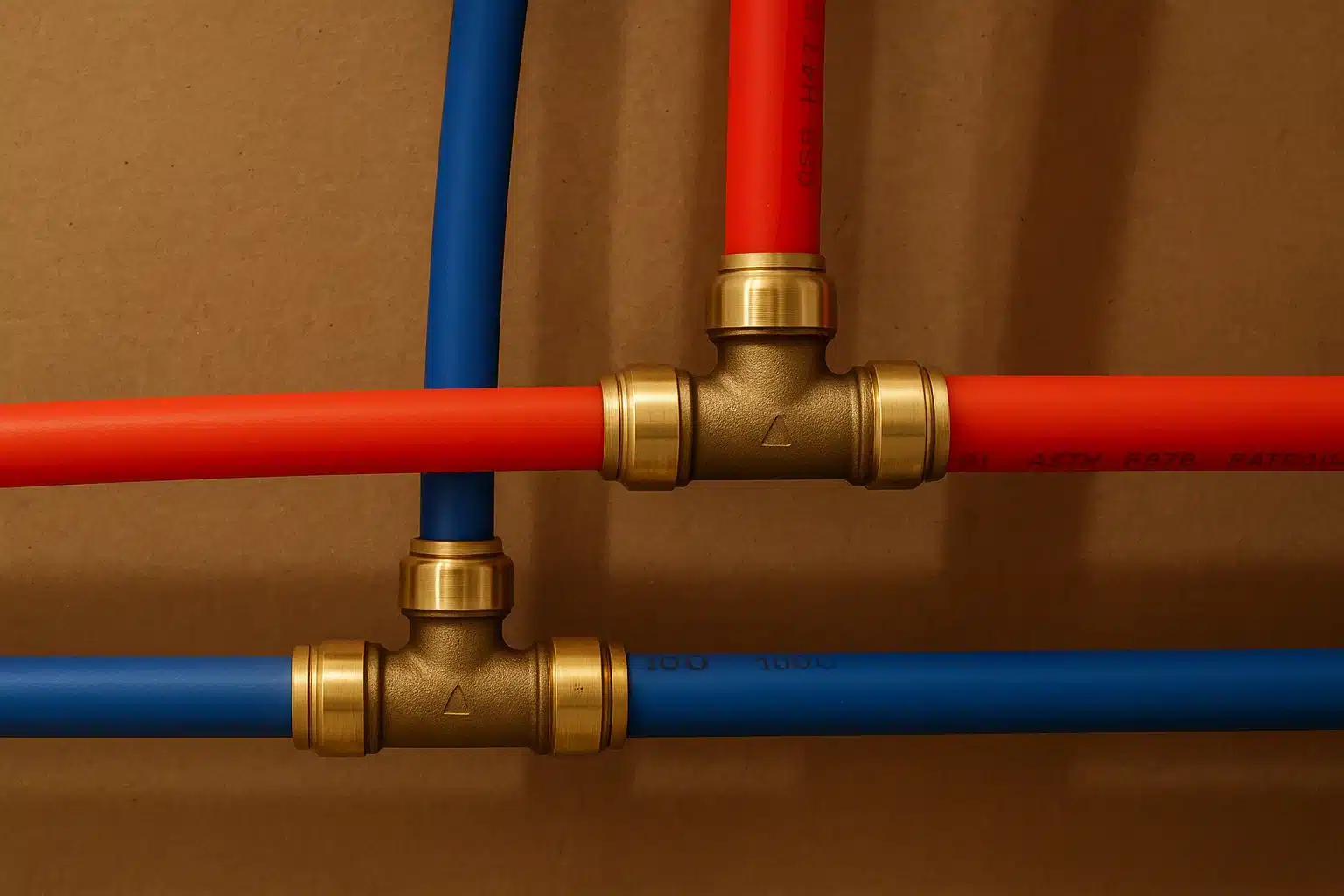
Modern materials matched to Riverside’s water. We install PEX and copper depending on the application, both approved under the governing plumbing code, and both able to stand up to the mineral content in Riverside’s groundwater supply better than the galvanized steel many older homes still carry.
Signs a Riverside Home Needs Repiping
A single leak usually calls for a repair. These patterns point toward repiping instead:
- Repeated pinhole leaks appearing in different locations on the same supply line
- Discolored water, especially a rusty or brown tint right after the water has sat unused
- Noticeably reduced water pressure across multiple fixtures, not just one
- Visible corrosion, flaking, or dimpling on exposed galvanized steel or copper pipe
- A home still running on its original galvanized steel supply lines from decades ago
- Water heater or fixture failures that keep recurring despite repairs
Our Process for Repiping in Riverside
Inspection and diagnosis. We assess the existing piping material, check pressure at multiple fixtures, and review the home’s leak history before recommending a scope of work.
A clear plan before any wall is opened. We walk through whether the job is a whole-home repipe or a targeted partial repipe of the affected section, and what that means for access points in walls, ceilings, or slab penetrations.
Code-compliant materials and routing. New piping is sized and routed to current code requirements, using materials rated for potable water contact.
Pressure testing before we close anything up. Every new run is pressure tested before drywall, flooring, or finish work goes back over it.
Cleanup and fixture reconnection. We reconnect fixtures, restore water service, and confirm pressure and flow at every point the new piping serves before calling the job complete.
Why Riverside's Hard Water Shapes Our Approach to Repiping
Riverside Public Utilities draws the city’s water supply from the Bunker Hill and Riverside groundwater basins, and that groundwater is measurably hard. The utility’s own 2025 Water Quality Report lists average water hardness at 197 milligrams per liter as calcium carbonate, or about 12 grains per gallon, with a tested range of 180 to 210 milligrams per liter across the year. On the standard hardness scale, that falls solidly in the hard to very hard range.
Hard water does not just affect fixtures and water heaters. Dissolved calcium and magnesium precipitate out as scale on the interior wall of a pipe over years of exposure, and that scale buildup narrows the effective diameter of galvanized steel piping in particular, restricting flow and creating rough surfaces where corrosion accelerates. In a home that has run on the same galvanized supply lines for decades, this is a major contributor to the reduced pressure and recurring pinhole leaks that eventually point toward a repipe.
This is why our repiping recommendations in Riverside account for the mineral content of the local supply, not just pipe age on its own. When a repipe is the right call, we also talk with homeowners about whether a water softener makes sense alongside the new piping, since softened water slows the same scale formation that shortened the life of the pipe being replaced.
What Affects the Scope of a Repiping Job
A few real variables determine the size and cost of a repiping job:
- Whether the job is a whole home repipe or a partial repipe of one affected section
- The home’s square footage and number of fixtures being connected
- Access difficulty, including slab penetrations, multi-story routing, or finished walls and ceilings that need to be opened and restored
- The material chosen, typically PEX or copper depending on the application
- Whether a water softener or other water treatment is added to the scope
We provide a specific estimate after inspecting the home rather than a flat rate quoted sight unseen.
Copper Versus PEX in a Riverside Repipe
Homeowners often ask which material we recommend, and the honest answer is that both hold up well when installed correctly. Copper has a long track record, resists heat well, and is a familiar material to most inspectors and future buyers. PEX is flexible, resists the pinhole leaks that hard water scale contributes to in rigid metal pipe, and typically involves fewer joints since it can run in longer continuous sections through walls and ceilings.
For a Riverside home dealing with hard groundwater, PEX often has an edge specifically because it does not corrode the way galvanized steel or, over a long enough timeline, copper can under aggressive water conditions. That said, some applications, exposed runs, water heater connections, and situations where a code requirement or an inspector’s preference favors copper, still call for it. We walk through both options for your specific home rather than defaulting to one material for every job, and we confirm whichever material is used is approved under the plumbing code that governs Riverside installations.
Related Plumbing Services in Riverside
Repiping often comes up alongside a few other services on the same property:
- Water heater installation, since a water heater connected to failing supply lines is often replaced in the same project
- Drain cleaning service, for homes dealing with both supply side and drain side aging plumbing
- Emergency plumbing, for active leaks that cannot wait for a scheduled repipe
What to Expect on Repiping Day
Most homeowners are more worried about the disruption than the plumbing itself, so it helps to know what the actual day looks like. We protect flooring and furnishings in the work area before cutting into any wall, and we cut only what is needed to reach the piping run rather than opening a wall further than the job requires. Once the new piping is in and pressure tested, we patch access points to a paintable finish, though the final paint match is typically left to the homeowner or a painter of their choice.
Water is off for the portions of the system actively being worked on, and we let you know ahead of time roughly how long that will be for your specific layout. For a multi-bathroom home, we sometimes phase the work so at least one working bathroom stays available for part of the project.
Frequently Asked Questions
How do I know if I need a full repipe or just a repair in Riverside?
A single leak in one spot usually calls for a repair. Repeated pinhole leaks in different locations, reduced pressure across multiple fixtures, or discolored water are patterns that point toward repiping. We inspect the actual pipe condition before recommending either option.
Does Riverside’s hard water actually damage pipes?
Yes. Riverside’s groundwater supply averages 197 milligrams per liter of hardness, in the hard to very hard range, according to Riverside Public Utilities’ own water quality reporting. Over years, dissolved minerals precipitate into scale inside galvanized steel piping, narrowing the pipe and accelerating corrosion.
How long does a whole home repipe take?
Timing depends on the home’s size, the number of fixtures, and access difficulty, such as slab penetrations or finished walls. We provide a specific timeline as part of the estimate after inspecting the property.
Will I have water service during the repipe?
We coordinate the work in sections wherever possible to limit how long water service is interrupted, and we walk through what to expect for your specific home before the job starts.
Do you repipe with PEX or copper?
We install both PEX and copper depending on the application, the home’s layout, and what the governing plumbing code allows for that specific use. We will recommend the material that fits your home rather than defaulting to one option for every job.
Should I add a water softener when I repipe?
Given Riverside’s hard groundwater supply, many homeowners choose to add a water softener at the same time as a repipe, since softened water slows the same mineral buildup that shortened the life of the old pipe. It is optional, and we can walk through whether it makes sense for your household.
Contact Lucky Air and Plumbing
Mon - Sat 8:00am - 10:00pm (PST)
Sunday CLOSED
12803 Temescal Canyon Rd. Suites B&C
Corona, CA 92883
[email protected]
Why Lucky Air & Plumbing?

- You're in luck because we've got the perfect solution to get your drain flowing like new again! Our qualified technicians will arrive and clear your drain for a $69 fee. NO MAIN LINES